
Here are a few logs on the progress we could make.
First Steps (2021)
We started by mulching one part of the land with lemon grass stalks and installed sprinklers to keep them moist and for cover crop.

And used rice and wheat straw for mulching another area of the land.

A mix of Sunhemp, Daincha and Horsegram were spread on the mulch. And they quickly covered the land helping keep the earth moist while also fixing Nitrogen. Occassionally cut sunhemp and other added mulch helped fasten the process of rejuvenating the soil.
Around 100 fruit tree saplings procured from nearby nurseries were planted around the border and all over the farm keeping good distance between trees.
The cover crop soon took over. From this:
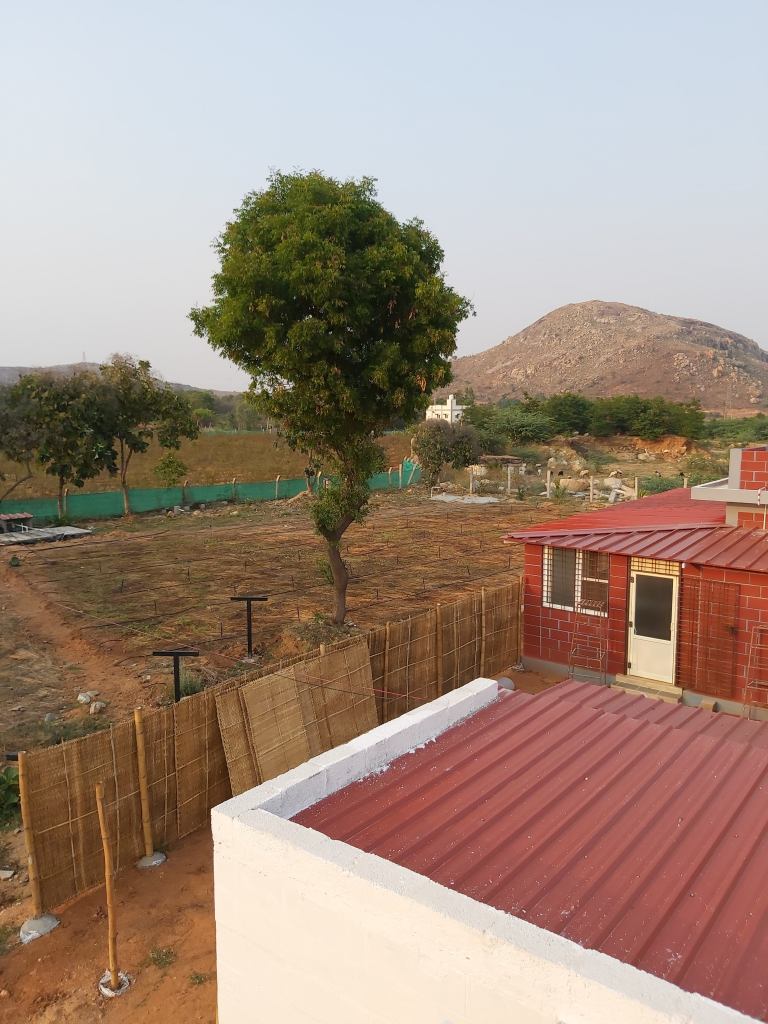
To this in four to five months.
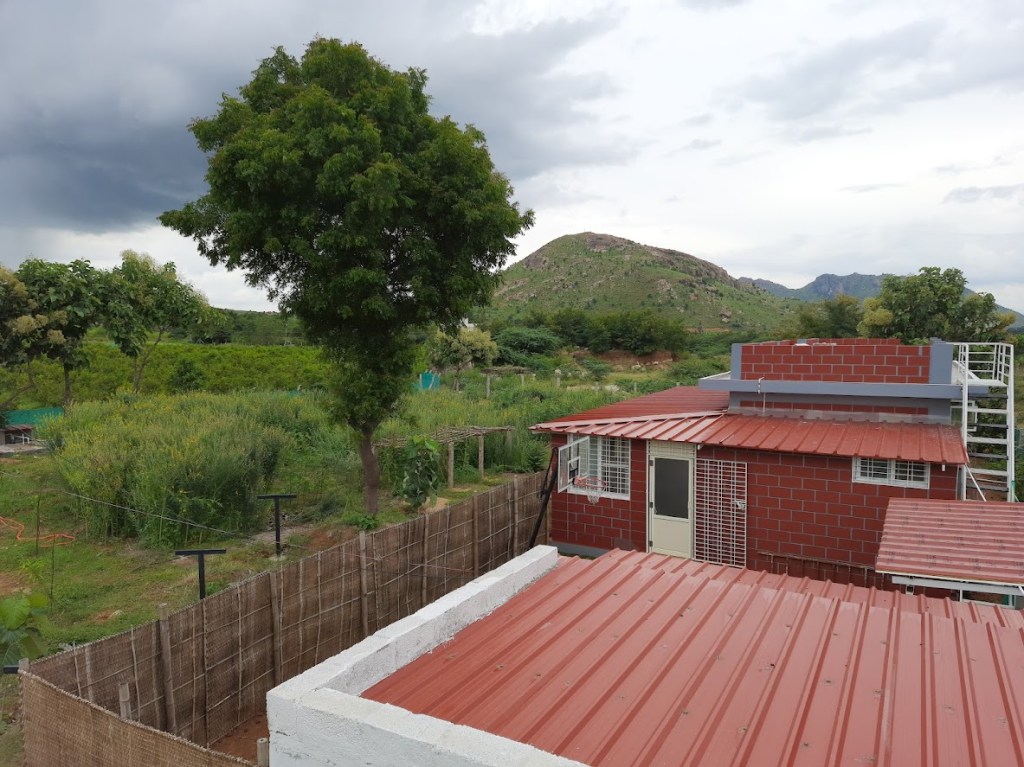
You can notice the thick growth of Sunhemp on top of the mulched land
A more close-up picture of the cover crop (taken in Oct 2021):

We could also grow some peanuts and green gram in one small parcel of the land – mostly rain-fed – sown around June/July and harvested around Sep/Oct.
Progress (2022)
Along with the cover crop, we could plant different fruit trees (Papaya, Mango, Water Apple, Sapota, Jamun, Jackfruit, Lemon etc) and vegetable plants (Tomato, Chilli, Moringa, Brinjal, Pumpkin etc).

The only inputs given to the fruit trees so far are goat manure available locally (around 3500 INR per tractor load) and pulp from neem oil extraction (available at local oil mills during neem oil season – just make sure the pulp is moist and smelling of neem oil – not completely dry).
The land started looking rich and active – with the magic of cover crops + mulching.

Some produce one day in May 2022.

Bananas and few other fruits also started appearing around this time.
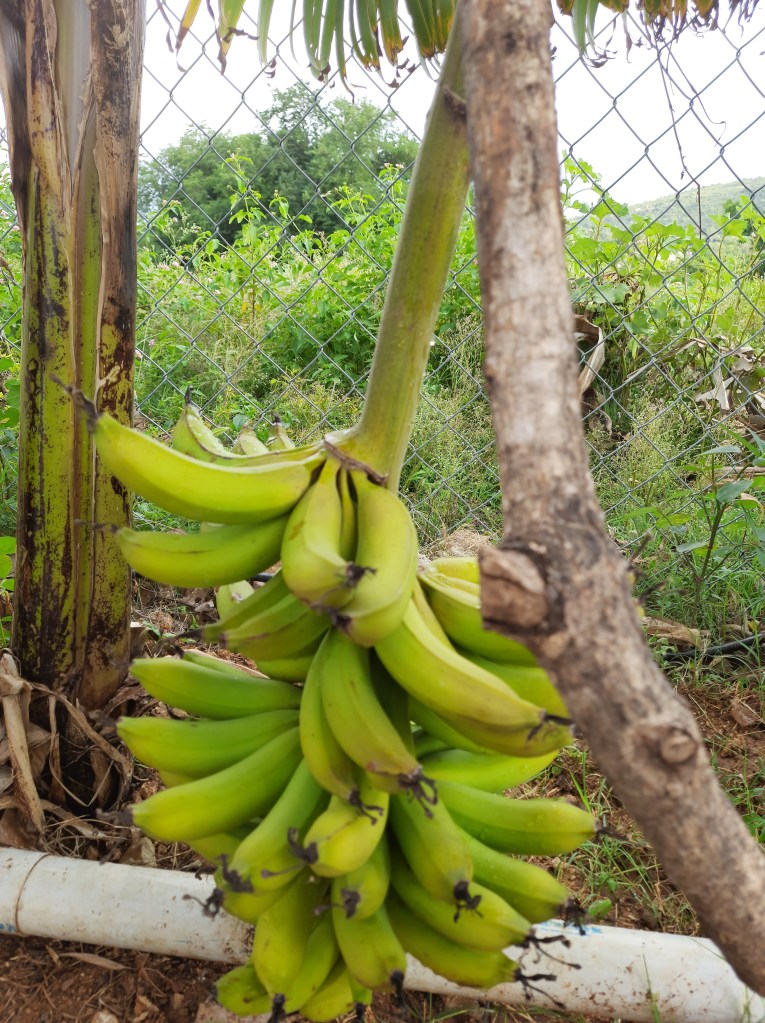
A click from September 2022.

Last picture of the year (taken in Dec 2022). You can see Flaxseed trees (Avise in local language) grew quickly and the tallest – offering shade yet letting in sun-light into the food forest (in making).

During the course of the year, there are probably three or four times we could spray Jivamruta (a mixture of native cow dung, cow urine, jaggery and others – fermented for a week). Ideally, this should have been done at least once a month but we had trouble easily procuring native cow dung as most locals own only hybrid cows.
Progress (2023)
A local group advocating Natural Farming suggested we change the cover crop from Sunhemp, Daincha and Horsegram to a more assorted seeds they call Nava Dhanya.

We tried this in a small stretch of land.
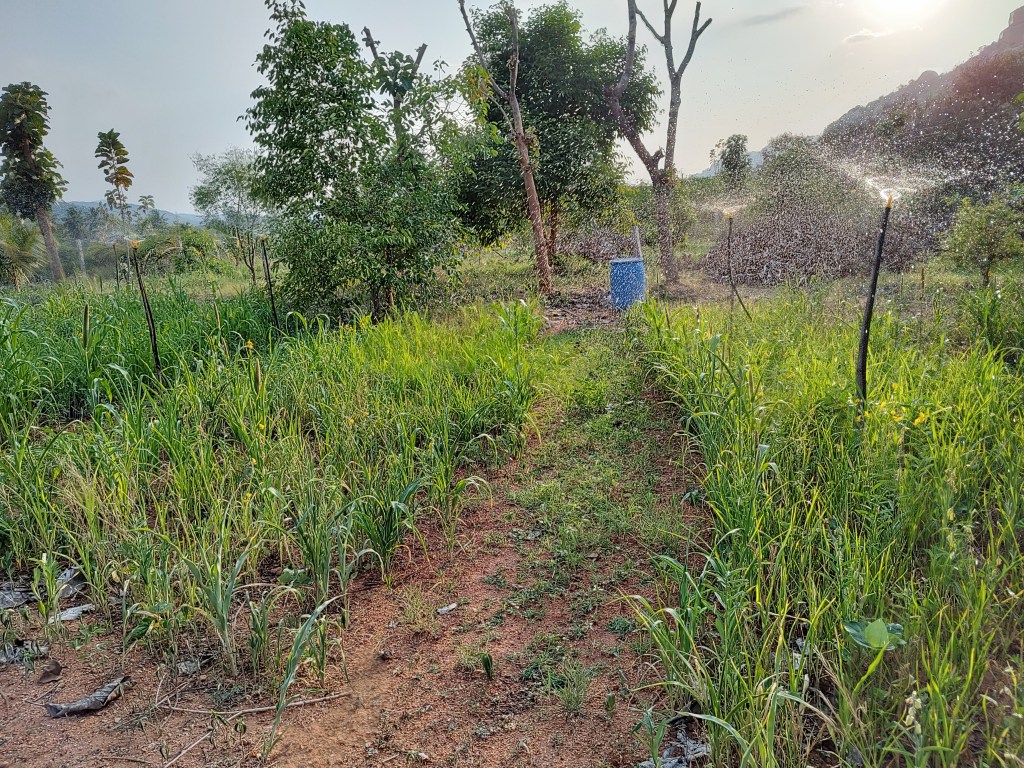
The results are good and one hopes this cover crop will continue to rejuvenate the soil in new ways.
Progress (2024)
Around July 2024, sowed peanut, horse gram and few others. Thanks to good rains, they are growing well.

Some clicks of the no-till food forest:


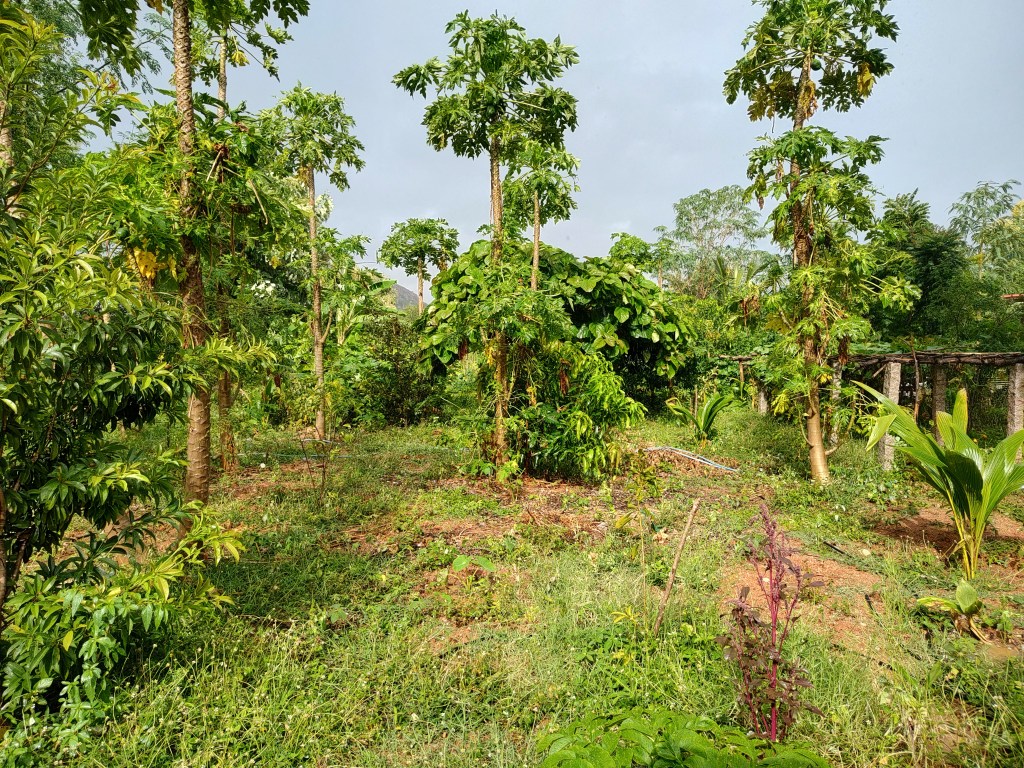
Efforts continues to be minimal. Plant and forget, mostly. We just ensured good water is provided during peak summer. And we could eat these: Fruits – mangoes, sapotas, water apples, custard apples, black jamun, lemons, anjeer, papaya, gauva, amla; Vegetables – tomatoes, carrots, bottle gourd, snake gourd, bitter gourd, a variety of beans, radish, pumpkins, brinjal; Greens – palak, amaranthus, moringa leaves, flaxseed flowers and leaves and more.
 sadhana.farm