This is a summary of the 117th pattern from the “A Patter Language” book by Christopher Alexander and his team.
The roof plays a primal role in our lives. The most primitive buildings are nothing but a roof. If the roof is hidden, if its presence cannot be felt around the building, or if it cannot be used, then people will lack a fundamental sense of shelter.
The roof itself only shelters if it contains, embraces, covers, surrounds the process of living.
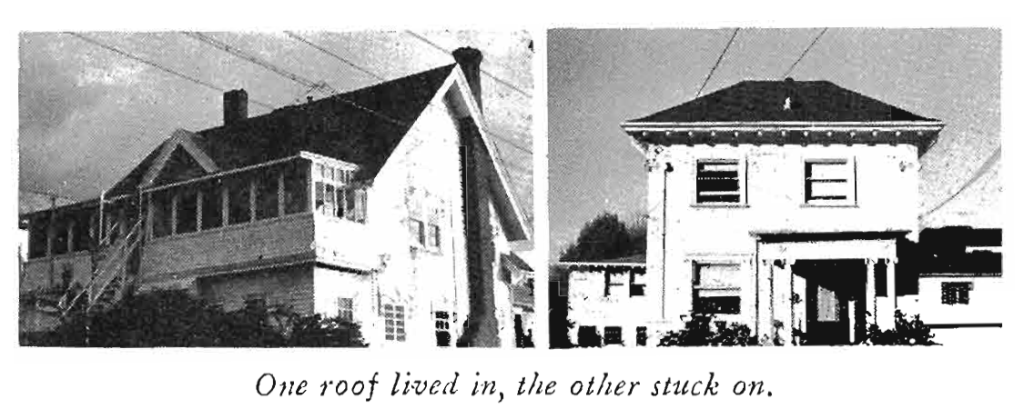
The difference between these two houses comes largely from the fact that in one the roof is an integral part of the volume of the building, while in the other it is no more than a cap that has been set down on top of the building. In the first case, when the building conveys an enormous sense of shelter, it is impossible to draw a horizontal line across the facade of the building and separate the roof from the inhabited parts of the building.
Despite 50 years of the flat roofs of the “modern movement,” people still find the simple pitched roof the most powerful symbol of shelter. When you ask a child to draw a house, without exception, they will draw a small cottage with two windows and smoke curling up from a chimney on the roof.
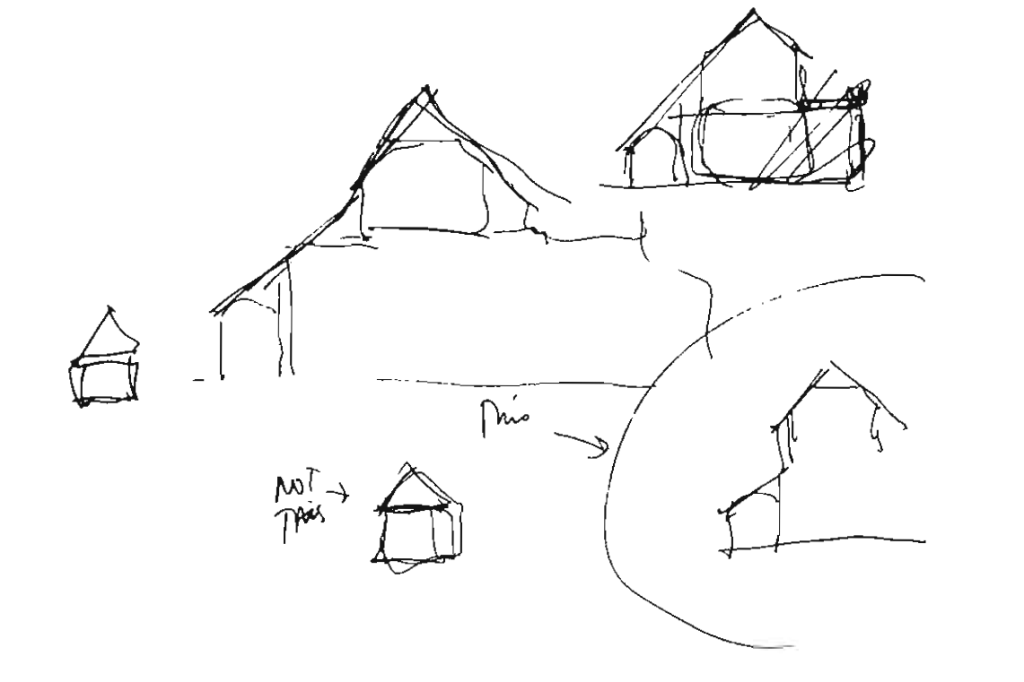
Slope the roof or make a vault of it, make its entire surface visible, and bring the caves of the roof down low, as low as 6’0″ or 6’6″ at places like the entrance, where people pause.
 sadhana.farm