This is a summary of the 130th pattern from the “A Patter Language” book by Christopher Alexander and his team.
Arriving in a building, or leaving it, you need a room to pass through, both inside the building and outside it. This is the entrance room.
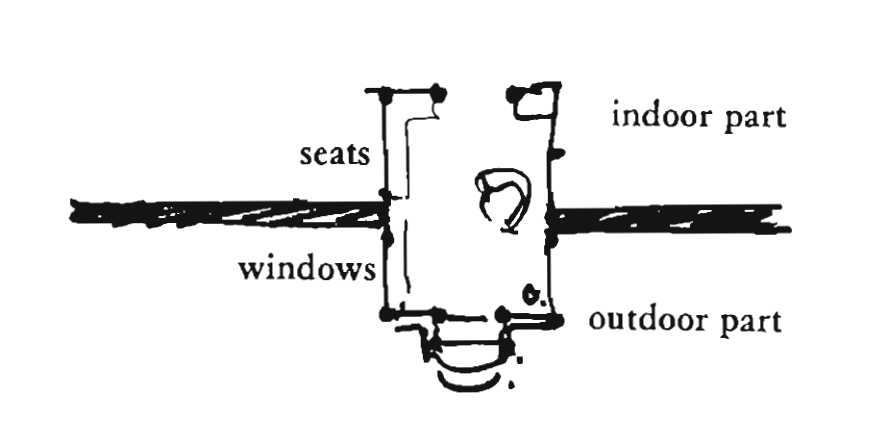
Relationship of windows to the entrance: A person answering the door often tries to see who is at the door before they open it. People do not want to go out of their way to peer at people on the doorstep. If the people meeting are old friends, they seek a chance to shout out and wave in anticipation. The entrance room therefore needs a window – or windows – on the path from the family room or kitchen to the door.
Need for shelter outside the door: People try to get shelter from the rain, wind, and cold while they are waiting. On the outside, therefore, give the entrance room walls enclosing three sides of a covered space.
The subtleties of saying goodbye: When hosts and guests are saying goodbye, the lack of a clearly marked “goodbye” point can easily lead to endless “well, we really must be going now,” and then further conversations lingering on, over and over again. Once they have finally decided to go, people try to leave without hesitation. People try to make their goodbye as non-abrupt as possible and seek a comfortable break. Give the entrance room, therefore, a clearly defined area, at least 20 square feet, outside the front door, raised with a natural threshold – perhaps a railing, or a low wall, or a step – between it and the visitors’ cars.
Shelf near the entrance: When a person is going into the house with a package: a) he tried to hold onto the package; he tries to keep it upright. and off the ground. b) At the same time he tries to get both hands free to hunt through pockets or handbag for a key. And leaving the house with a package: c) At the moment of leaving people tend to be preoccupied with other things, and this makes them forget the package which they meant to take. You can avoid these conflicts if there are shelves both inside and outside the door, at about waist height; a place to leave packages in readiness; a place to put them down while opening the door.
Interior of the entrance room: Politeness demands that when someone comes to the door, the door is opened wide. Yet, people seek privacy for the inside of their houses. The family, sitting, talking, or at table, do not want to feel disturbed or intruded upon when someone comes to the door. Make the inside of the entrance room zigzag, or obstructed, so that a person standing on the doorstep of the open door can see no rooms inside, except the entrance room itself, nor through the doors of any rooms.
Coats, shoes, children’s bikes: Muddy boots have got to come off. People need a five foot diameter of clear space to take off their coats. People take bicycles, and so on indoors to protect them from theft and weather. Children tend to leave all kinds of clutter – roller skates, trikes, shovels, balls – around the door they use most often. Therefore, give the entrance room a dead corner for storage, put coat pegs in a position which can be seen from the front door, and make an area five feet in diameter next to the pegs.
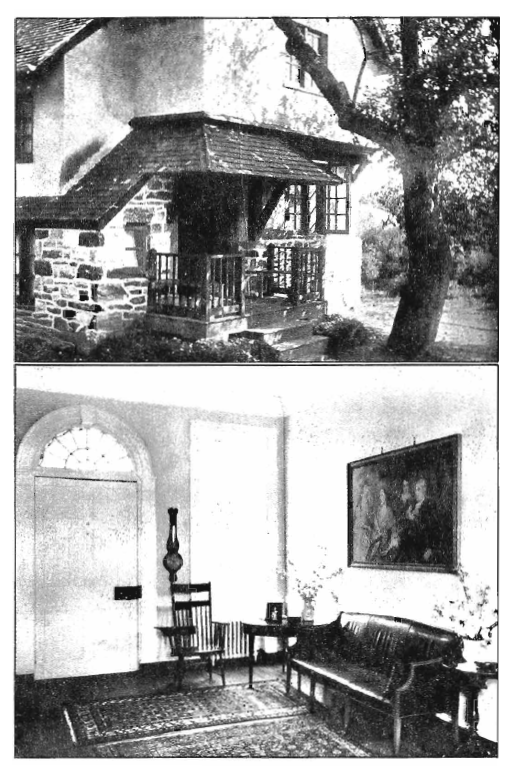
At the main entrance to a building, make a light-filled room which marks the entrance and straddles the boundary between indoors and outdoors, covering some space outdoors and some space indoors. The outside part may be like an old-fashioned porch; the inside like a hall or sitting room.
 sadhana.farm